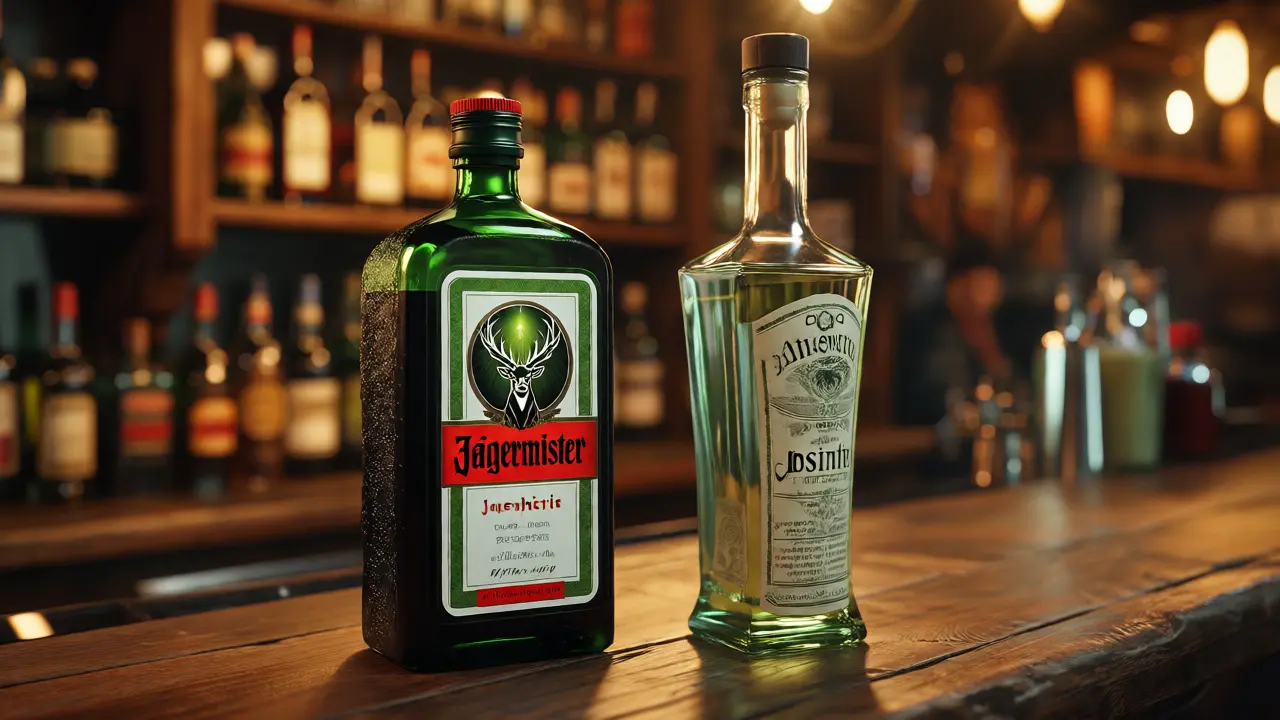
Standing in front of the liquor store shelf, you see two bottles that look like distant cousins. One is dark green, the other is often bright green or clear. Both promise a mysterious herbal kick. Many people assume Jägermeister is just a milder version of absinthe, or vice versa. But are they actually similar? The short answer is no. They share some ingredients, but their soul, history, and effect on your palate are worlds apart.
If you have ever wondered why one tastes like cough syrup with spices and the other like anise-flavored magic, this guide breaks it down. We will look at what makes them tick, where they overlap, and when to pour which one into your glass.
What exactly is Jägermeister?
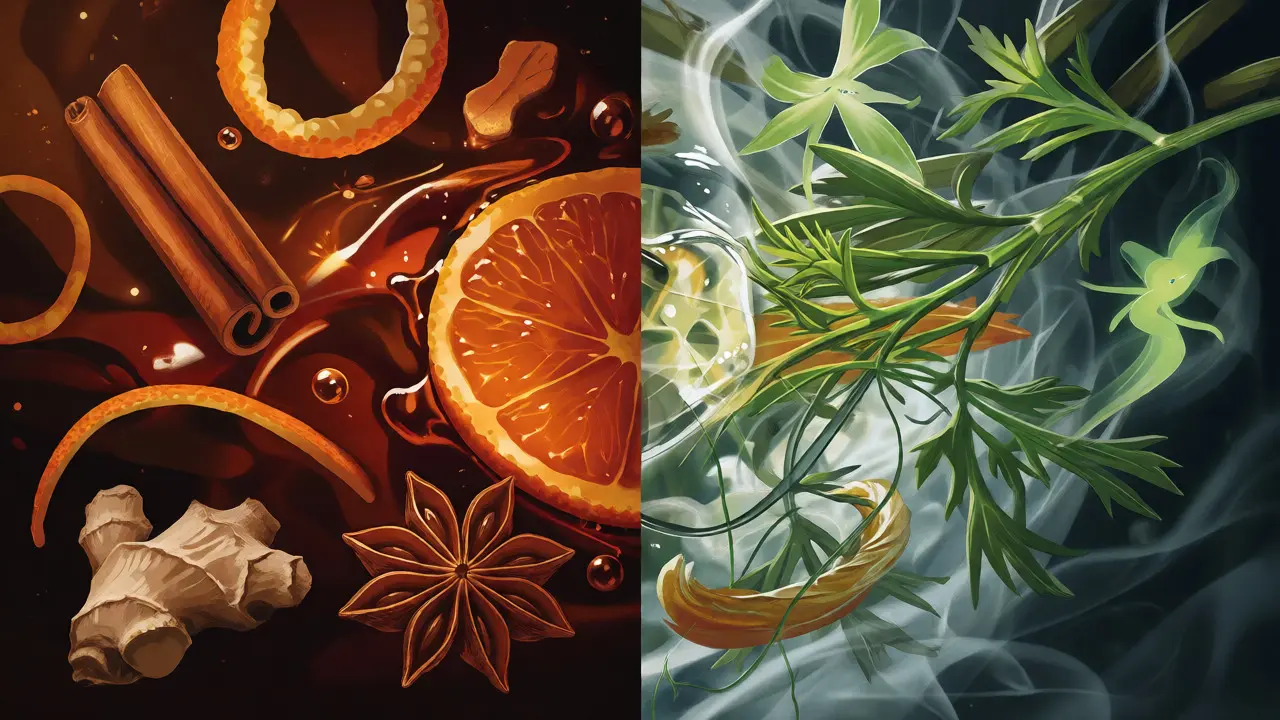
Jägermeister is a German digestif created in 1934 by Curt Mast in Wolfenbüttel. It is classified as a herbal liqueur. Think of it as a complex spice bomb sealed in a bottle. The recipe involves macerating 56 different botanicals-including citrus peels, ginger, star anise, and saffron-in alcohol for about a year before blending and aging in oak barrels.
The result is a thick, dark brown liquid (which looks green under certain lights) with a sweet, spicy profile. It has 35% ABV (alcohol by volume). You usually drink it chilled, straight from the freezer, as a shot after a heavy meal. It is designed to settle your stomach, not necessarily to party hard, although college students worldwide disagree with that intention.
And what about absinthe?
Absinthe is a distilled, highly alcoholic beverage originating from Switzerland and popularized in France during the late 19th century. Unlike Jägermeister, absinthe is not a liqueur; it is a spirit. This means it is distilled, not just steeped, and typically contains less added sugar.
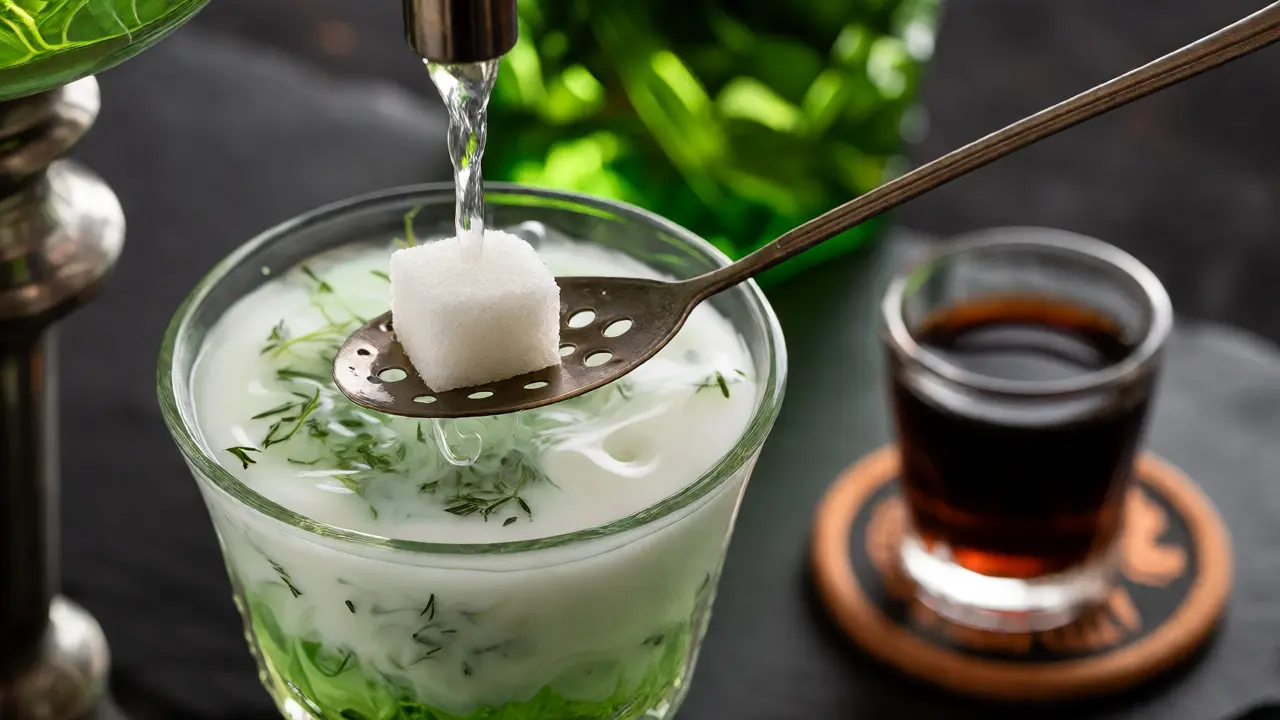
The holy trinity of absinthe ingredients is Artemisia absinthium (grand wormwood), green anise, and florence fennel. Other herbs like hyssop and lemon balm may join the mix. Traditional absinthe ranges from 45% to 74% ABV. That is significantly stronger than most spirits. Its flavor is dominated by anise and licorice notes, often described as "medicinal" or "perfumed." When you add water, it turns cloudy-a phenomenon called the "louche"-due to essential oils precipitating out of the solution.
The shared DNA: Herbal complexity
Why do people confuse them? Because both rely heavily on botanicals. If you looked at their ingredient lists side-by-side, you would spot overlaps:
- Anise: Present in both. In Jägermeister, it is subtle, hidden behind cinnamon and orange. In absinthe, it is the main character.
- Wormwood (Artemisia absinthium): This is the controversial herb. It contains thujone, a compound once believed to be psychoactive. Absinthe gets its name from this plant. Jägermeister also uses wormwood, but in much smaller quantities, primarily for bitterness.
- Fennel and Star Anise: Common in both recipes, contributing to the digestive properties.
However, the ratio changes everything. In absinthe, these herbs are distilled to create a volatile, aromatic spirit. In Jägermeister, they are macerated and sweetened, creating a syrup-like consistency.
| Feature | Jägermeister | Absinthe |
|---|---|---|
| Type | Herbal Liqueur | Distilled Spirit |
| ABV (Alcohol Content) | 35% | 45-74% |
| Sweetness | High (added sugar) | Low to None (unsweetened) |
| Dominant Flavor | Citrus, Ginger, Cinnamon, Licorice | Anise, Wormwood, Fennel |
| Color | Dark Brown/Green | Clear, Green, or Red (Blanche/Rouge) |
| Key Ingredient | 56 Botanicals (complex blend) | Grand Wormwood, Anise, Fennel |
| Thujone Content | Negligible / Not regulated as primary | Regulated (max 35 mg/kg in EU) |
The myth of the hallucinations
You might have heard that absinthe makes you hallucinate. This comes from the legend of the "Green Fairy" driving artists like Van Gogh and Toulouse-Lautrec mad. The culprit was blamed on thujone, a chemical found in wormwood.
Modern science tells a different story. Studies show that legal absinthe contains very low levels of thujone-often far below the threshold needed to cause any psychoactive effects. A study published in the Journal of Studies on Alcohol and Drugs found no significant difference between drinkers of absinthe and those drinking vodka regarding cognitive impairment or hallucinations.
So why did artists feel so intense? Likely because they were drinking massive amounts of high-proof alcohol mixed with poor diet and lack of sleep. Jägermeister, with its lower alcohol content and high sugar, rarely causes such dramatic reactions unless consumed in extreme excess. If you drink absinthe responsibly, you will feel warm, relaxed, and slightly buzzed-not tripping.
Taste test: What to expect
Let’s talk flavor. If you take a sip of Jägermeister, you get a rush of sweetness followed by a complex spice train: cinnamon, clove, ginger, and a hint of citrus peel. It coats your tongue. It feels rich and dessert-like.
Absinthe is sharper. The first hit is strong alcohol burn, followed immediately by the pungent, medicinal taste of anise and fennel. It is dry, bitter, and refreshing. Without water dilution, it can be overwhelming. With water, it becomes smooth, releasing floral and herbal aromas that Jägermeister simply doesn’t have.
Think of it this way: Jägermeister is like a spiced chocolate cake. Absinthe is like biting into a fresh licorice stick dipped in perfume.
When to choose which?
Your choice depends entirely on the occasion and your personal taste preferences.
Choose Jägermeister if:
- You want a sweet, easy-to-drink shot.
- You are serving guests who prefer familiar flavors like cola or citrus.
- You need a digestif after a heavy meal.
- You are making a "Jägerbomb" (though purists cringe at this).
Choose Absinthe if:
- You enjoy bold, anise-flavored drinks like ouzo or sambuca.
- You want a sophisticated cocktail base (like a Sazerac).
- You appreciate ritual-the slow drip of ice water over a sugar cube.
- You want a higher alcohol kick without the cloying sweetness.
Cocktail potential
Jägermeister works well in simple mixes. It pairs surprisingly well with energy drinks, apple juice, or even hot coffee. It masks bad whiskey well in punch bowls.
Absinthe is a bartender’s secret weapon. Even a teaspoon can transform a cocktail. The classic Absinthe Frappé highlights its herbal notes. In a Martinez or Sazerac, it adds depth and aroma that other spirits cannot replicate. Using absinthe in a cocktail is like adding truffle oil to pasta-a little goes a long way.
Final thoughts: Cousins, not twins
Are Jägermeister and absinthe similar? Only superficially. They both come from the world of European herbal traditions and use some of the same plants. But their production methods, alcohol strength, and flavor profiles make them distinct entities.
Jägermeister is a sweet, accessible digestif for mass appeal. Absinthe is a potent, nuanced spirit for those who love bold anise flavors and historical mystique. Don’t substitute one for the other in a recipe unless you are ready for a major surprise. Next time you’re at the bar, try a proper absinthe ritual instead of another Jägerbomb. Your palate might thank you.
Does Jägermeister contain thujone?
Yes, Jägermeister contains trace amounts of thujone because it includes wormwood in its list of 56 botanicals. However, the concentration is extremely low and not considered pharmacologically active. It is safe for regular consumption.
Is absinthe illegal anywhere today?
No, absinthe is legal in most countries, including the US, UK, and EU nations. Bans were lifted in the early 2000s after studies proved that thujone levels in traditional absinthe were too low to cause toxicity or hallucinations.
Can I replace absinthe with Jägermeister in cocktails?
Generally, no. Absinthe provides a sharp anise flavor and high alcohol proof without sweetness. Jägermeister is sweet and lacks the dominant anise note. Substituting them will drastically change the balance of a cocktail. Sambuca or Pastis are better substitutes for absinthe.
Which is healthier, Jägermeister or absinthe?
Neither is particularly healthy due to alcohol content. However, Jägermeister has significantly more added sugar per serving. Absinthe is unsweetened, so it has fewer calories from carbohydrates, but its higher alcohol content means more calories from ethanol. Moderation is key for both.
Why does absinthe turn milky when water is added?
This is called the "louche" effect. Essential oils from the herbs (anise, fennel, wormwood) are soluble in alcohol but not in water. When you add water, the alcohol concentration drops, causing the oils to precipitate out and scatter light, turning the drink cloudy.